On a Kalahari farm, the waterhole is the theatre. Everything that lives here must drink, and on a dry farm that means everything eventually walks past the same patch of water. Our chalet and campsite both overlook it. These are the animals you are most likely to see there, and a little about each of them. A note first: this is a farm, not a reserve, and the herds roam as they please. Sightings are never guaranteed, and that is exactly what makes a good morning at the waterhole feel earned.
Oryx (gemsbok): the Kalahari icon
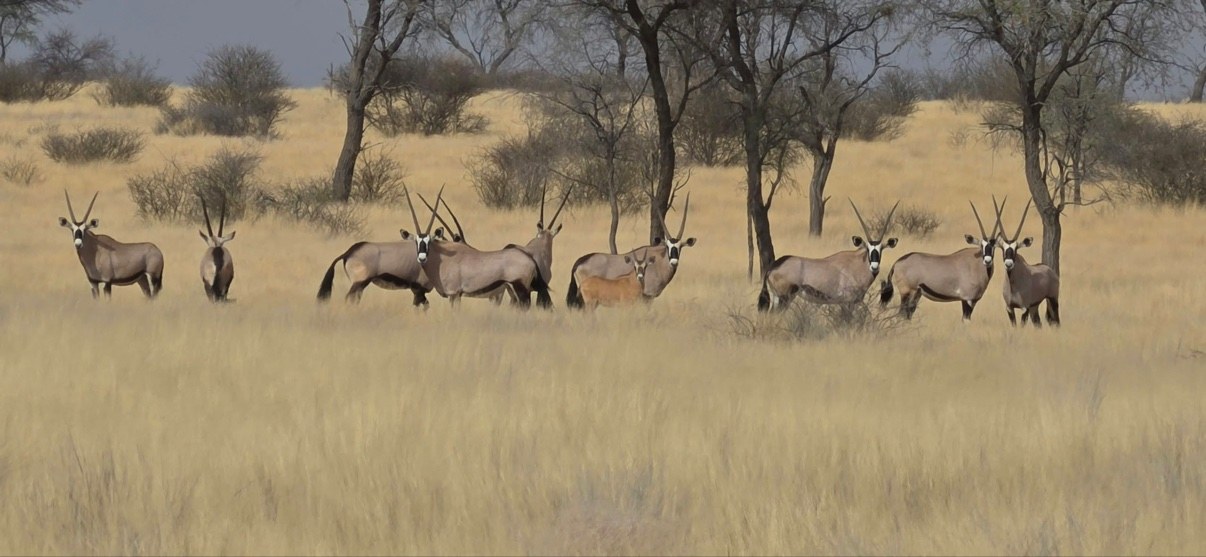
If one animal owns this landscape, it is the oryx: grey-tan body, black-and-white face markings, and straight horns that can approach a metre on the cows. Oryx are built for heat and distance and can go long stretches drawing moisture from their food. They are regulars at our waterhole and the animal guests photograph most.
Kudu: the grey ghost
The big bulls, with their spiral horns and white chevrons, are shy browsers that melt into the camelthorn shade. Kudu tend to come quietly, early or late, and half the pleasure is spotting one standing motionless where you swore there was only bush a second ago.
Sable and eland: the heavyweights
Sable bulls are jet black and striking, with scimitar horns swept back over the shoulders. Eland are the opposite presence: Africa's largest antelope, tawny and heavy, moving with a patience that makes the ground feel it. Both are part of the farm's herds and both stop conversation when they appear at the water.
Springbok, in three colours
Springbok are the waterhole's daily bread: nimble, numerous and always on the move. Alongside the normal colouring we keep black and white springbok, so a single herd can look like three species at a glance. On cool mornings you may see pronking, the stiff-legged bouncing that gives them their name.
Lechwe and impala: the grazers
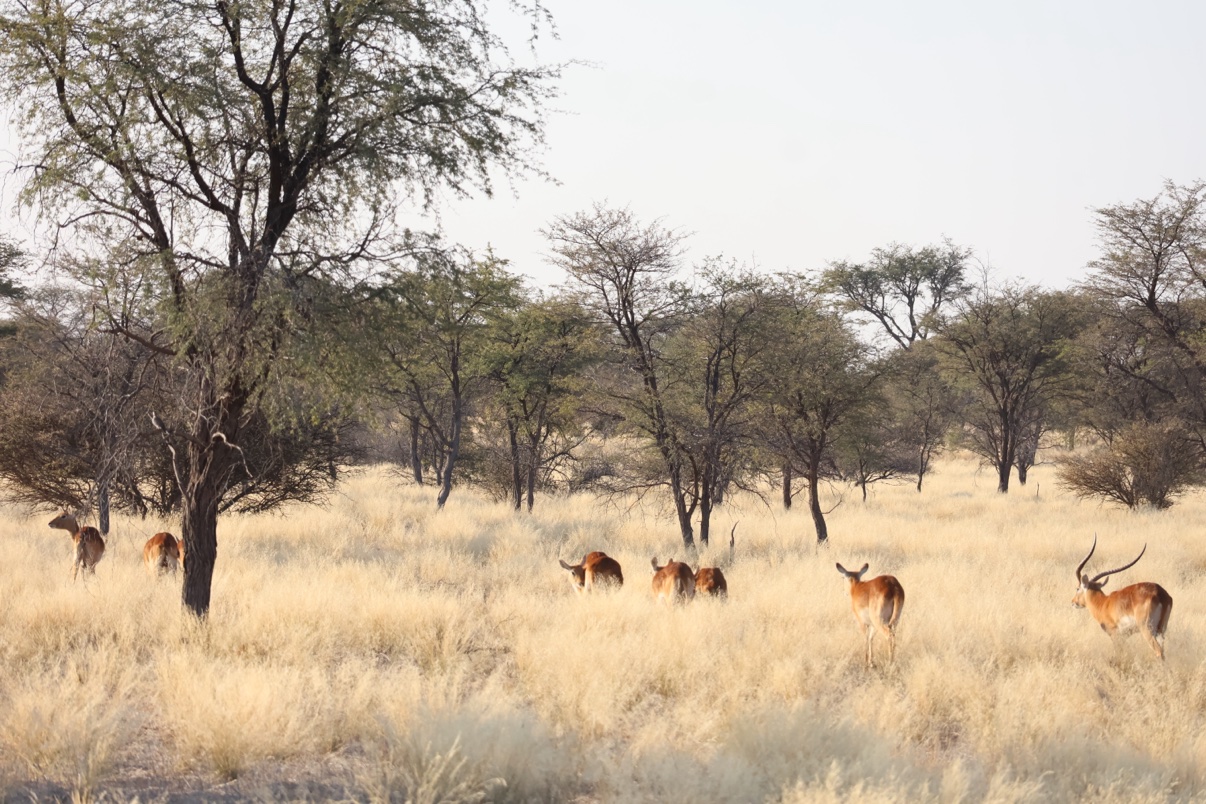
Lechwe, red-brown antelope with long hind legs, are at home around the farm's wetter patches and graze in herds. Impala are the graceful all-rounders of the bush, usually in groups, always alert, and quick to snort an alarm that every other animal at the waterhole listens to.
Giraffe: the regulars
Our giraffe are regulars at the waterhole, and watching one drink is a small event in itself: legs splayed, head down in the most vulnerable posture in the bush, then up again in one smooth heave. At golden hour they walk the treeline like slow ships.
When to watch
- Dawn: the day's first drinkers arrive as the light comes up. Coffee on the chalet patio or at your stand, binoculars ready.
- Midday: quiet in summer, when most game rests in the shade. In winter, herds may drink through the day.
- Dusk: the second great showing. Pour something cold and stay still, the animals know the shape of a seated person is no threat.
- Dry season (May to October): game concentrates around water and viewing is at its most reliable. The green season spreads the herds out, but pays you back in newborn animals and dramatic skies.
To go looking rather than waiting, our guided game drives (N$500 per person, 2 to 3 hours) and bush walks (N$300 per person) take you out across the farm with someone who reads it daily. The full list is on the experiences page.
Farm game viewing is not a safari checklist. It is the same animals, in the same place, becoming familiar. By day three you have favourites.
Watch the waterhole yourself
Stay in the chalet or camp above the waterhole at Zania and let the game come to you.
Plan your stay