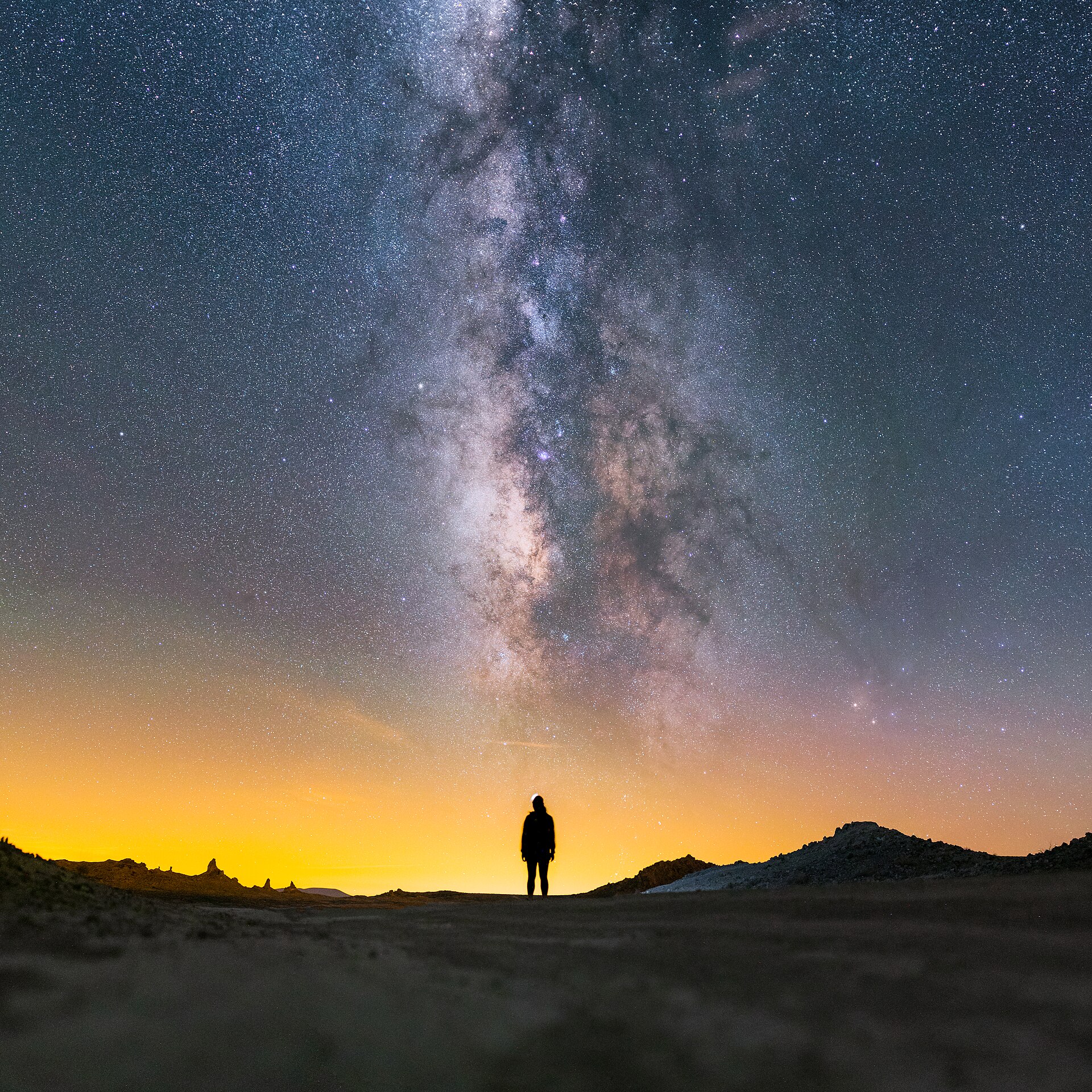
On a clear night in the Kalahari, the sky does something most people have never seen. The Milky Way is not a faint smudge. It is a bright, textured river of light stretching from horizon to horizon, with dark dust lanes you can trace with your finger. First-time visitors often go quiet. Then they ask what they are looking at. This guide answers that.
Why the Kalahari is world class for stargazing
Three things make a great stargazing destination: darkness, dry air, and altitude. The Kalahari has all three. There are almost no towns and no light pollution for dozens of kilometers in any direction. The air is extremely dry, which means less haze and steadier seeing. And much of the region sits over 1,000 meters above sea level, putting you above a meaningful slice of the atmosphere.
The result is regularly rated among the darkest skies accessible to travelers anywhere in the world. On a moonless night, you can read the time on your watch by starlight alone, and your shadow is cast by the Milky Way.
When to go
- New moon is everything. Check the moon phase before you travel. The week around new moon gives the darkest skies. A full moon washes out all but the brightest stars.
- Dry season (May to October) brings the clearest, most stable skies, and the bright core of the Milky Way is high overhead in the winter evenings.
- Green season (November to April) can be spectacular too, with dramatic cloud buildups at sunset giving way to clear nights, though occasional clouds are part of the deal.
What you will see
The Milky Way core. In the southern hemisphere winter, the brightest part of our galaxy rises high overhead. Look for the dark lanes and star clouds around Scorpius and Sagittarius.
The Southern Cross (Crux). The most famous southern constellation is small and unmistakable: four bright stars in a kite shape. It points the way south and is on the flags of several southern nations.
Scorpius. A giant scorpion curling across the winter sky, with the red supergiant Antares at its heart. It is one of the easiest constellations to recognize anywhere.
Alpha and Beta Centauri. The two bright "Pointers" near the Southern Cross. Alpha Centauri is the closest star system to our sun.
The Magellanic Clouds. Two small, fuzzy patches that are actually entire dwarf galaxies orbiting our own, visible to the naked eye. They look like detached pieces of the Milky Way.
Planets and satellites. Venus, Mars, Jupiter, and Saturn regularly outshine the stars, and on any clear night you will count several satellites gliding silently overhead.
How to find your way around
Start with the Southern Cross. Once you can find it reliably, you can find south: extend the long axis of the cross about four and a half times its length, and you land near the south celestial pole. From there, the sky starts to make sense. Scorpius trails to the east of the cross in winter, and the Pointers sit just beside it.
Give your eyes at least 20 minutes to adapt to the dark. Avoid white light completely during that time. A red torch preserves your night vision and is the standard tool of every astronomer.
Practical tips for a great night out
- Bring a blanket or a reclining camp chair. Your neck will thank you.
- Dress warmer than you think. Kalahari nights, especially May to August, get properly cold.
- Download a star app like Stellarium or SkySafari before you leave wifi. Point your phone at the sky to identify what you are seeing.
- For photos: a tripod, a wide lens, manual focus set to infinity, and 15 to 25 second exposures at high ISO will capture the Milky Way. Even a modern phone on night mode, propped still, can surprise you.
- Go out after the fire dies down and the camp is quiet. The best viewing is usually between 9pm and midnight.
The Kalahari night sky is not an activity. It is the ceiling of your room. Step outside and look up.
Stargazing at Zania
Our farm has no town lights in any direction, which is exactly why the stars are part of the experience here. Guests stargaze from the campsite, the chalet veranda, or a blanket on the sand. If you want a guided tour of the constellations, just ask. We love sharing our sky.
Sleep under the darkest skies
Book the chalet or a campsite at Zania and plan your trip around the new moon.
Plan a stargazing stay